
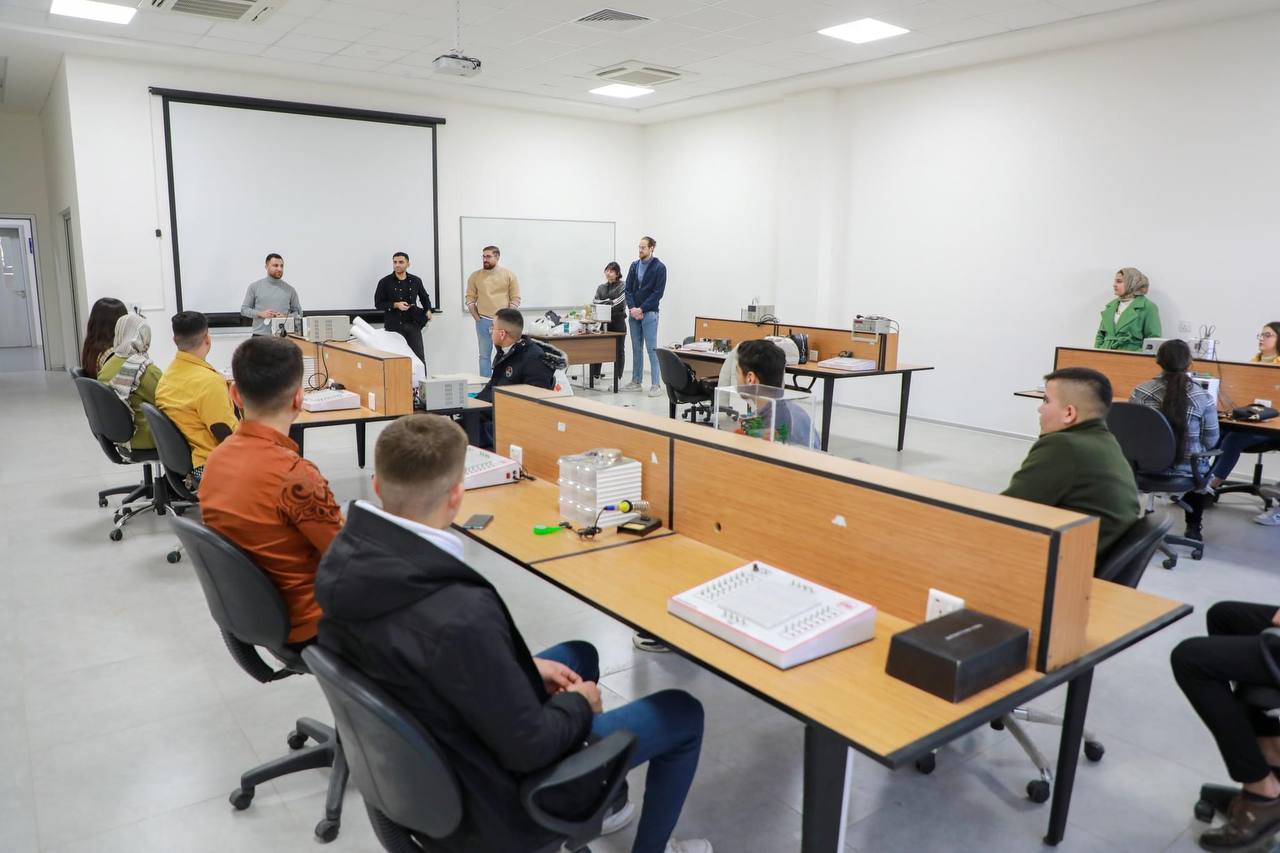
Bachelor of Biomedical Engineering with Honours is offered as a full-time programme, responding to the increasing demand for professionals capable of integrating biomedical science with engineering principles. Graduates who can interpret medical challenges through the lens of engineering sciences are uniquely positioned to develop solutions relevant to both medical practitioners and engineers.
Biomedical engineering, as an emerging and interdisciplinary field, has significantly advanced modern medicine and healthcare. Its contributions include the design and manufacture of artificial human organs and prosthetics, development of communication and assistive devices for individuals with disabilities, creation of novel diagnostic and therapeutic tools, and innovation of medical procedures. Technological progress has been so substantial that a wide range of medical devices is now available for home-based patient care.
The programme combines a balanced curriculum of engineering and biomedical sciences. In the first and second years, students are introduced to foundational concepts such as Introduction to Biomedical Engineering and Basic Anatomy and Physiology, alongside core engineering subjects including Engineering Mathematics and Digital Electronics. General university courses such as Academic English Skills and Islamic and Asian Civilisation are also undertaken.
In the third year, students progress to specialised modules, including Biomedical Instrumentation and Measurement, Clinical Engineering, and Biomedical Materials. The final year emphasises advanced integration of knowledge through courses such as Biomedical Systems Design, Biochemistry for Biomedical Engineers, and Biomedical Signal Processing. Students must also select three electives from areas such as Rehabilitation Engineering, Biosystems Modelling, and Medical Informatics. Additionally, the fourth year includes the Final Year Project (FYP), Professional Practice in Biomedical Engineering, and Entrepreneurship. These components are strategically designed to cultivate competent, innovative, and industry-ready biomedical engineers.
Graduates are well-prepared for careers in hospitals, biomedical product companies (including manufacturing, sales, service, and research and development), and government agencies such as the Ministry of Health, Malaysia. Potential roles include:
- Regulatory officers overseeing the implementation of the Medical Devices Act.
- Hospital or medical centre engineers responsible for medical equipment procurement, maintenance, and operation.
- Biomedical device sales engineers.
- Research and development engineers in biomedical engineering.
- Engineers specialising in testing and calibration services.
- Engineers in medical device manufacturing.
- Engineers in the Ministry of Health managing and operating public healthcare engineering services.
Program Information
|
1 |
Awarding Institution |
Universiti Teknologi Malaysia (UTM) |
|
2 |
Teaching Institution |
Qaiwan International University |
|
3 |
Programme Name |
Bachelor of Engineering (Biomedical) with Honours |
|
4 |
Final Award |
Bachelor of Engineering (Bio-Medical) with Honours |
|
5 |
Programme Code |
SEBB |
|
6 |
Professional or Statutory Body of Accreditation |
Ministry of Higher Education |
|
7 |
Language(s) of Instruction |
English |
|
8 |
Mode of Study (Conventional, distance learning, etc) |
Conventional |
|
9 |
Mode of operation (Franchise, self-govern, etc) |
Self-governing |
|
10 |
Study Scheme (Full Time/Part Time) |
Full Time |
|
11 |
Study Duration |
Minimum: 4 years - Maximum: 6 years |
|
No |
Classification |
Credit Hour |
Percentage |
|
1 |
University General Course |
16 |
11.7% |
|
2 |
Mathematics |
15 |
10.9% |
|
3 |
Programme Core |
94 |
68.6% |
|
4 |
Programme Electives |
9 |
6.57% |
|
5 |
Free Electives |
3 |
2.19% |
|
TOTAL |
137 |
100% |
|
|
|
ENGINEERING COURSE |
|
|
|
A |
Lecture/Project/ Lab Workshop/Field/Design |
92 - |
|
|
|
Industrial Training |
5 |
|
|
|
Final Year Project |
6 |
|
|
TOTAL CREDIT HOURS FOR PART A |
103 |
75.18% |
|
|
|
NON-ENGINEERING |
|
|
|
|
Applied Sciences/ Mathematic / Com |
15 |
|
|
B |
Management/Law/Humanities/Ethics/Eco nomy |
8 6 |
|
|
|
Language |
2 |
|
|
|
Co-Curriculum Free Electives |
3 |
|
|
TOTAL CREDIT HOURS FOR PART B |
34 |
24.82% |
|
|
TOTAL CREDIT HOURS FOR PART A & B |
137 |
100% |
|
|
TOTAL CREDIT HOURS FOR GRADUATE |
137 |
||
|
Code |
Intended Learning Outcomes |
|
PLO1 |
Apply knowledge of science and engineering fundamentals to the solution of complex biomedical engineering problems. |
|
PLO2 |
Identify, formulate and solve complex biomedical engineering problems through structured literature research and scientific approach using first principles of mathematics, natural sciences and engineering sciences. |
|
PLO3 |
Design solutions for complex biomedical engineering problems with consideration for public health and safety, cultural, societal, and environmental needs. |
|
PLO4 |
Conduct investigation into complex Biomedical Engineering problems using research-based knowledge and methodology to provide scientific conclusions. |
|
PLO5 |
Select and apply appropriate techniques, resources, and modern medical engineering and IT tools, to complex biomedical engineering activities, with an understanding of the limitations. |
|
PLO6 |
Apply reasoning informed by contextual knowledge to assess societal, health, safety, legal and cultural issues to professional biomedical engineering practice. |
|
PLO7 |
Understand the role of biomedical engineers in society regarding social, cultural, environmental and global responsibilities for sustainable development. |
|
PLO8 |
Ability to evaluate and make appropriate professional decisions by taking into account ethical principles, social and environmental responsibilities. |
|
PLO9 |
Communicate effectively on complex engineering activities through written, oral, visual and graphical forms to colleagues and society at large. |
|
PLO10 |
Develop leadership attributes and be committed in achieving common goals in a multi-disciplinary setting using good team working skills. |
|
PLO11 |
Ability to adapt with the latest development within the biomedical engineering field for life-long learning and continuous knowledge improvement. |
|
PLO12 |
Demonstrate knowledge and understanding of management and financial aspects of biomedical engineering and develop entrepreneurship skills |
